
Secure Financial Data Grid
Secure Financial Data Grid
Okay, let's be real: the crypto world took a hit. We all felt it after that October crash, especially in the DeFi space. But, if there's one thing I've learned in my years of watching the tech landscape evolve, it's that downturns breed innovation. It's in the moments where it feels like the world is ending, that the most brilliant minds lock themselves away and come up with something truly game-changing. It’s like the fallow period for a farmer, you know? The land needs rest, but after that rest comes an even more bountiful harvest.
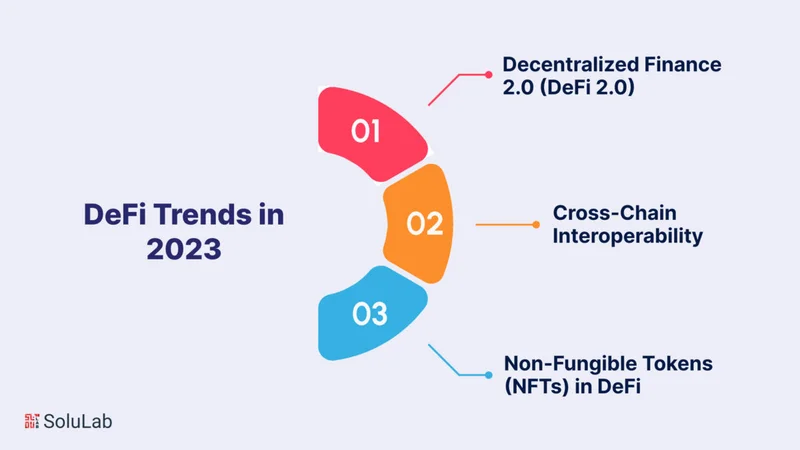
And that's exactly what we're seeing in DeFi right now. The FalconX report tells a story of tokens struggling, yes, but also of investors making smart, strategic moves. They’re not just blindly throwing money; they’re looking for solid ground, for projects with buybacks, for tokens that actually do something. This isn't just about speculation; it’s about building a sustainable financial future.
Think about HYPE and CAKE – even though they're down, they're outperforming many others, largely due to buyback programs. And then you have MORPHO and SYRUP, which are showing resilience because of their unique approaches to lending, like sidestepping the Stream Finance fallout. It’s like watching a forest fire: the underbrush burns away, but the strong trees survive, and new growth emerges from the ashes.
It's fascinating to see how different DeFi subsectors are reacting. Spot and perpetual decentralized exchanges (DEXes) are becoming more affordable relative to their activity, which means prices are dropping faster than the actual usage of these platforms. Some DEXes, like CRV, RUNE, and CAKE, are increasing their fees. Meanwhile, lending and yield names are getting pricier, because their prices haven't dropped as much as their fees. It’s like the market is recalibrating, trying to find the real value in a space that got overheated, and finding that lending and yield are stickier than trading in a downturn. This is the kind of differentiation that signals a maturing market, not a dying one.
And this is where it gets really exciting. The Solana (SOL) story is a great example, and I want you to really picture this. Imagine a network consistently humming along at 1,000+ transactions per second, with near-perfect uptime. That’s Solana right now. It’s not just a theoretical possibility; it’s happening. And while it's influenced by the ebb and flow of Bitcoin and Ethereum, its core utility is undeniable, it functions primarily as a utility token for transaction fees and staking, not as a speculative instrument alone. The DeFi and NFT activity on Solana is expanding, and that includes both institutional and retail players. That's real, tangible growth.
Solana's secret sauce? Proof of History (PoH) combined with Proof of Stake (PoS). PoH is basically a cryptographic timestamping system – in simpler terms, it's like giving every transaction a super-accurate digital clock, so validators can process them much faster. This allows Solana to confirm transactions in under 400 milliseconds and process thousands of transactions per second at a tiny cost. It's the kind of tech that makes you sit back and think, "Wow, this is actually the future."
But there's a catch, isn't there always? High throughput requires serious hardware, which can lead to validator concentration. It's a bit of a double-edged sword: we get incredible speed, but we also need to be mindful of decentralization. It's crucial to monitor validator distribution and throughput stability.
Now, let's talk about Binance. The exchange is always looking for the next big thing, and while it is speculative, the project aims to become part of Bitcoin DeFi, which already holds a $7.38B TVL and $175M in VC funding, as reported by Maestro. The potential for a Binance listing can be a game-changer for any project. Coinspeaker's analysis points to Bitcoin Hyper (HYPER), Mantle (MNT), and Maxi Doge (MAXI) as potential candidates. These projects are tapping into key trends: Bitcoin Layer 2 solutions, modular DeFi ecosystems, and the enduring appeal of meme coins. As the 10 Upcoming Binance Listings to Watch in 2025 team points out, traders need to manage FOMO risk. These projects are tapping into key trends: Bitcoin Layer 2 solutions, modular DeFi ecosystems, and the enduring appeal of meme coins.
It's worth noting that meme coins are still a force to be reckoned with and I love to see it. Maxi Doge, for example, is tapping into the degen culture of high-risk traders, uniting them through humor and memes. It’s a reminder that crypto isn’t just about finance; it’s about community, culture, and having a bit of fun along the way. What's equally fascinating is Mantle, a scalable Ethereum Layer 2 with a governance token. Mantle is designed for advanced DeFi strategies, allowing developers to build dApps that benefit from the liquidity of Ethereum while using the speed of Mantle. It's a fundamentally strong L2, and Binance often pays attention to ecosystems like this.
Of course, nothing is guaranteed. As the Coinspeaker team points out, traders need to manage FOMO risk. Early entries can pay off, but sharp post-listing reversals are common. Verifying audits and liquidity is essential. It’s like panning for gold: you might strike it rich, but you need to be careful and do your homework.
So, where does this leave us? The DeFi market is down, but it’s far from out. Innovation is happening, investors are getting smarter, and projects with real utility are starting to shine. We're seeing resilience, adaptation, and a relentless drive to build a better financial future. And that, my friends, is something to be excited about. It's a reminder that even in the face of adversity, the human spirit – and the spirit of innovation – always finds a way.